
Biomolecular human–environment interactions in the Sistiaga Group
The Sistiaga Group develops biomolecular tools to reconstruct past interactions among humans, microbes, animals, and environments. By recovering molecular evidence preserved in archaeological and environmental archives, the group seeks to reveal how ecosystems and human societies evolved through time.
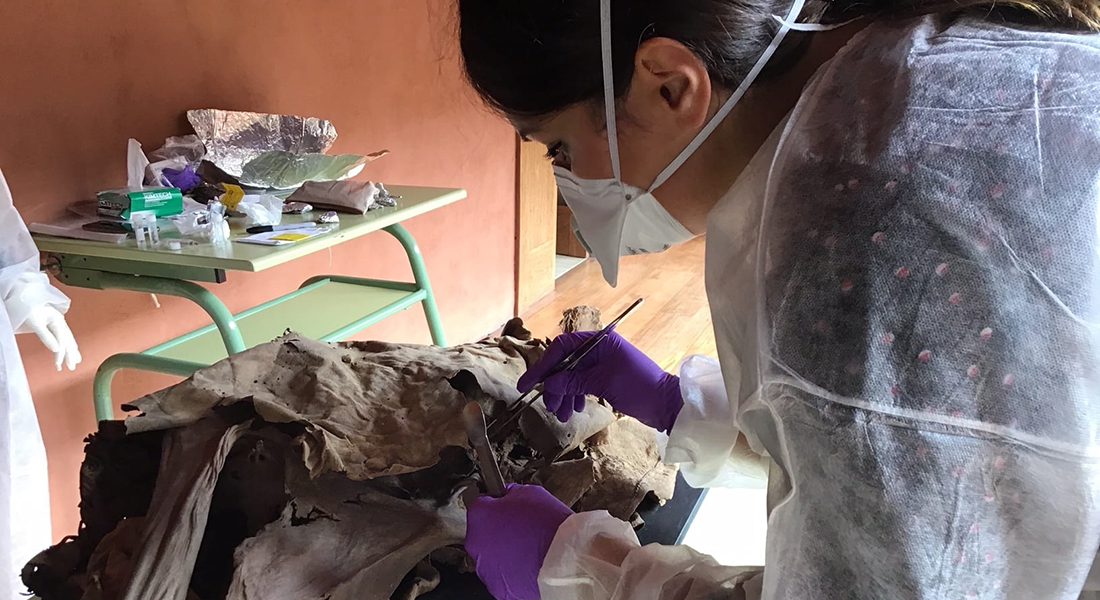
The Sistiaga Group investigates the molecular traces preserved in archaeological, geological, and environmental archives to understand long-term interactions between humans, microbes, animals, and ecosystems.
Our research combines archaeology, geochemistry, microbiology, paleoecology, and biomolecular sciences to reconstruct past environments, diets, health, microbiomes, and human activities.
A central focus of the group is the development and application of biomolecular methods capable of extracting information from sediments, coprolites, archaeological deposits, mummified remains, and other ancient materials. We integrate organic geochemistry, lipid biomarker analysis, metabolomics, proteomics, ancient DNA, and isotopic approaches to recover biological and environmental signals that are often invisible in traditional archaeological records.
The group has pioneered the use of fecal biomarkers and ancient biomolecules to study human evolution and past ecosystems. Research includes reconstructing Neanderthal diets and microbiomes, investigating the environmental contexts of early hominin evolution in Africa, exploring the evolution of human-associated microbial communities, and examining how environmental change influenced human populations through time. Our work spans diverse archives, from Paleolithic cave sediments and coprolites to historical cesspits and environmental deposits.
In addition to addressing fundamental questions about human evolution and environmental change, the group develops analytical methods and infrastructure for biomolecular archaeology. We established Denmark's first laboratory dedicated to ancient lipids and metabolites, creating new opportunities for interdisciplinary research and collaboration across archaeology, paleoenvironmental science, microbiology, and heritage science.
By combining molecular evidence with archaeological and environmental datasets, our research provides a deeper understanding of how humans have adapted to changing environments, how ecosystems responded to human activities, and how microbiomes, diets, and health evolved across millennia. These long-term perspectives contribute to contemporary discussions on biodiversity, environmental change, and human resilience.
Sistiaga, A., Husain, F., Uribelarrea, D., Martín-Perea, D. M., Ferland, T., Freeman, K. H., ... & Summons, R. E. (2020). Microbial biomarkers reveal a hydrothermally active landscape at Olduvai Gorge at the dawn of the Acheulean, 1.7 Ma. Proceedings of the National Academy of Sciences, 117(40), a24720-24728.
Groussin, M., Poyet, M., Sistiaga, A., Kearney, S. M., Moniz, K., Noel, M., ... & Alm, E. J. (2021). Elevated rates of horizontal gene transfer in the industrialized human microbiome. Cell, 184(8), 2053-2067.
Sistiaga, A., Mallol, C., Galván, B., & Summons, R. E. (2014). The Neanderthal meal: a new perspective using faecal biomarkers. PloS one, 9(6), e101045.
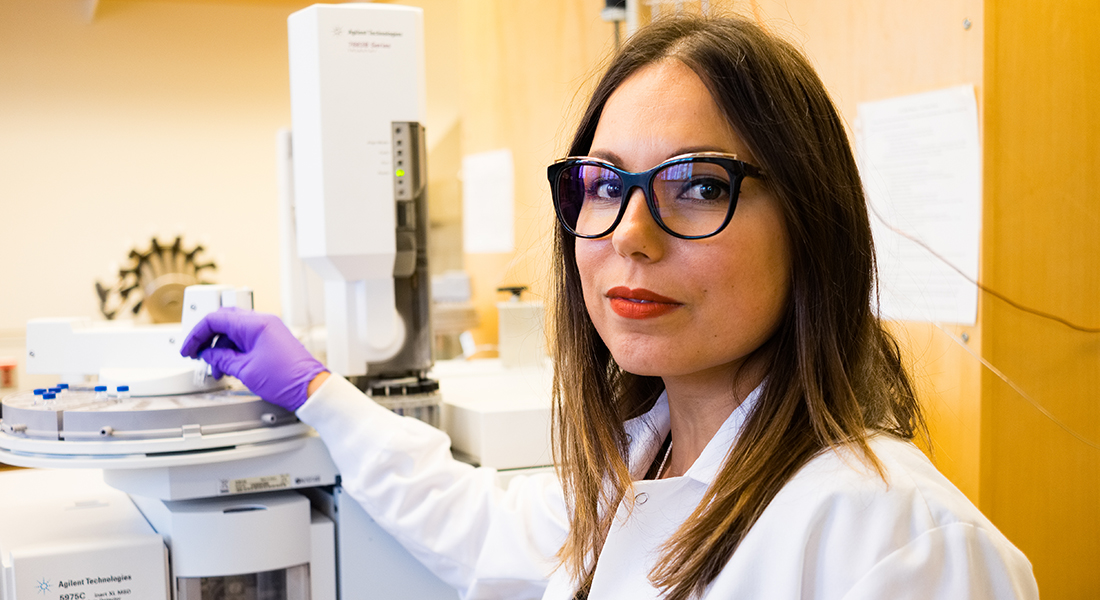
Group Leader
Maria Ainara Sistiaga Gutierrez
Assistant professor
Phone: +45 35 33 06 50
E-mail: ainara.sistiaga@sund.ku.dk
Group members
| Name | Title | Phone | |
|---|---|---|---|
| Hannah-Marie Martiny | Postdoc | +4535322914 | |
| Jorsua Herrera Bethencourt | Academic Research Staff | +4535327517 | |
| Maria Ainara Sistiaga Gutierrez | Assistant Professor | +4535330650 |