
Genomic paleoepidemiology in the Sikora Group
The Sikora Group uses ancient and modern genomics to reconstruct the deep history of infectious disease: how humans, pathogens, animal reservoirs and vectors have interacted to shape disease emergence, spread and evolution.
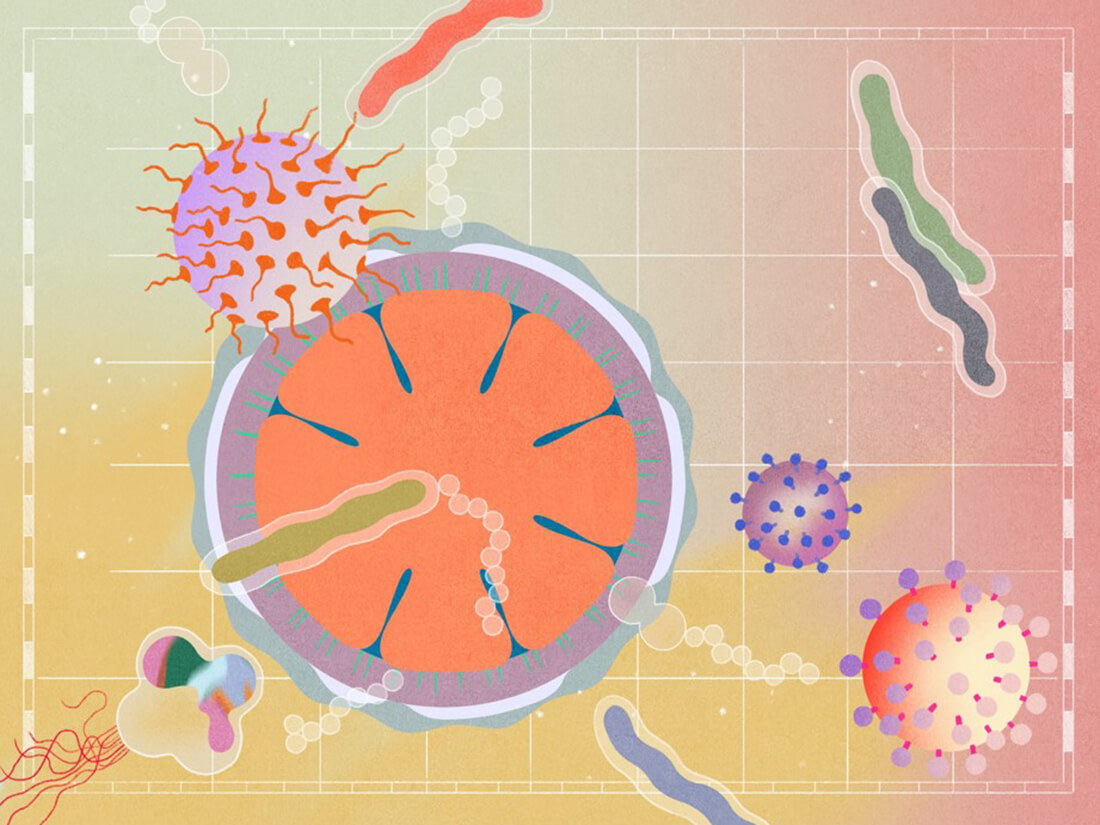
Pathogens have shaped human history, and human history has shaped pathogens. Ancient DNA lets us observe this interplay directly, sampling past hosts and pathogens rather than inferring them from present-day diversity alone.
Our research focuses on fundamental questions including:
- Emergence and spread: Where did pathogens originate, and how did their evolution and dispersal track changes in human populations and environments?
- Disease ecology: How have host switching, reservoir populations and vectors driven transmission dynamics?
- Co-evolution: How have hosts and pathogens adapted to one another through natural selection and demographic change?
We combine ancient DNA with large-scale genomic data from present-day humans, pathogens, reservoirs and vectors, and develop computational and statistical methods to reconstruct population histories, transmission and dispersal.
Macleod, R., Seersholm, F. V., et al (2026). Lethal plague outbreaks in Lake Baikal hunter-gatherers 5,500 years ago. Nature, 654(8119), 697–705
Seersholm, F.V., Ramsøe, A., Cao, J. et al. Population discontinuity in the Paris Basin linked to evidence of the Neolithic decline. Nature Ecology & Evolution 10, 677–688 (2026).
Sikora, M., et al. 2025. The spatiotemporal distribution of human pathogens in ancient Eurasia. Nature 643, 1011-1019
Seersholm, F. V. et al. "Repeated plague infections across six generations of Neolithic Farmers." Nature 632.8023 (2024): 114-121.
Mühlemann, B., ... Sikora, M. 2020. Diverse variola virus (smallpox) strains were widespread in northern Europe in the Viking Age. Science 369, 6502, p. 1-12.
See full list of publications by Martin Sikora (at Google Scholar).

Group members
This content is temporarily unavailable because the system it is fetched from cannot be reached. The rest of the site works as usual.
Status is available on the operating status page.